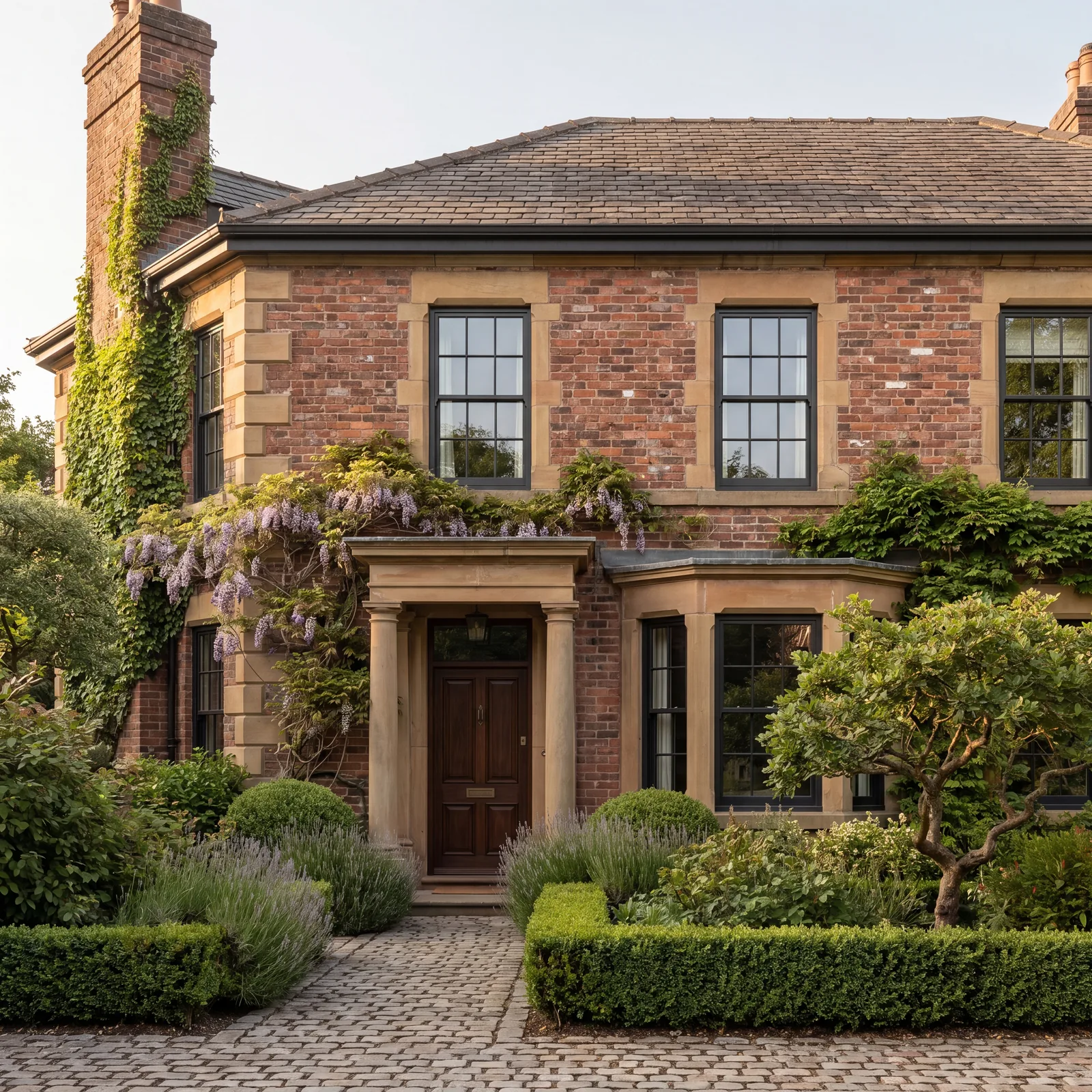
The short answer: start with the building, not the window catalogue. On a period property, proportions, sightlines, opening style, colour and glazing-bar detail usually matter more than the material alone.
Many period homes across Wilmslow, Bowdon, Altrincham, Hale, Knutsford and Didsbury have been altered over time. Some need sensitive replacement of poor later windows; others may be better served by repair, restoration or a more specialist conservation route.
Begin with the original proportions
Window proportions shape the whole elevation. Before choosing a product, look at the width of the frames, the depth of the reveals, the spacing between panes and the rhythm of the openings across the front of the property.
Frames that are too bulky can make a period home look heavy. Frames that are too stark or modern can look disconnected from the brick, stone or render. The aim is not to fake age; it is to choose a replacement that sits quietly and respectfully on the building.
Check planning and conservation constraints early
Listed buildings, conservation areas and Article 4 directions can restrict what can be changed. Requirements vary by local authority and by the significance of the property. It is sensible to check before ordering windows or changing external details.
If the property is listed or contains historically important original windows, specialist conservation advice may be needed. A standard replacement window is not always appropriate.
Material options for period homes
| Option | Where it can work | Watch-outs |
|---|---|---|
| Heritage-style aluminium | Slim sightlines, durable finish and a precise look for suitable character homes and extensions. | Needs careful colour and glazing-bar choices so it does not look too stark. |
| Flush uPVC | Practical replacements where budget matters and the existing windows are already non-original. | Profiles may still look heavier than aluminium or timber on sensitive elevations. |
| Timber or specialist conservation windows | Listed buildings, highly sensitive facades and homes retaining original details. | May require specialist joinery, permissions and more maintenance. |
| Mixed specification | Useful when front elevations need a more traditional treatment and rear elevations can be more contemporary. | Needs careful colour and style coordination across the property. |
Choose colours and details carefully
Anthracite is popular, but it is not always the best answer for older homes. Soft black, off-white, stone, heritage green and muted grey can all work depending on the brick, stone, roofline, doors and surrounding properties.
Glazing bars, dummy sashes, frame depth and handle finish can change the whole feel. On front elevations, the small details are often what make the replacement look considered rather than generic.
Improve comfort without spoiling the character
Better windows can improve warmth, security and noise reduction, but the performance specification must suit the property. Triple glazing, acoustic glass or solar-control glass may be useful in some rooms and unnecessary in others.
Ventilation should not be ignored. Older properties often rely on a different pattern of airflow than modern homes. Sealing everything without considering ventilation can create condensation and indoor air quality problems.
Repair or replace?
If original windows are important and repairable, repair may be the right first option. Replacement becomes more appropriate when windows are poor later additions, beyond economic repair, insecure, heavily draughty or no longer suitable for the way the home is used.
For issues such as failed sealed units, handles, hinges or localised draughts, our window repair service may be a better first step than full replacement.
Project context: view the Wilmslow heritage window replacement project for an example of slim heritage-style glazing in a premium location.
A sensible process for period window projects
- Photograph each elevation and note which windows are original or later replacements.
- Check conservation, listed-building or planning constraints before specifying.
- Decide which elevations need the most sensitive treatment.
- Compare frame proportions, sightlines, colours and glazing-bar options.
- Confirm glass specification, ventilation and security requirements.
- Request an itemised quote that explains what is included.
Common mistakes to avoid
- Choosing a modern frame profile that is too bulky for the facade.
- Ignoring conservation or listed-building requirements until late in the project.
- Using the same specification on every elevation when the front and rear need different treatment.
- Choosing colour from a small swatch without considering brick, stone and roof tones.
- Replacing repairable original windows without checking whether repair is more appropriate.
Frequently asked questions
What matters most when replacing period property windows?
Proportions, sightlines, opening style, colour and glazing-bar detail usually matter more than choosing a material first.
Do period property windows need planning permission?
Some do. Listed buildings, conservation areas and Article 4 directions can restrict window replacement. Check with the local authority or a planning professional before work starts.
Can aluminium windows suit a period home?
Yes, in the right design. Slim heritage-style aluminium can suit some period homes when proportions, colour and glazing details are handled carefully.
Should original windows be repaired instead of replaced?
If original windows are historically important and repairable, repair may be better. Replacement is more suitable when poor later windows need improving or existing units are beyond economic repair.