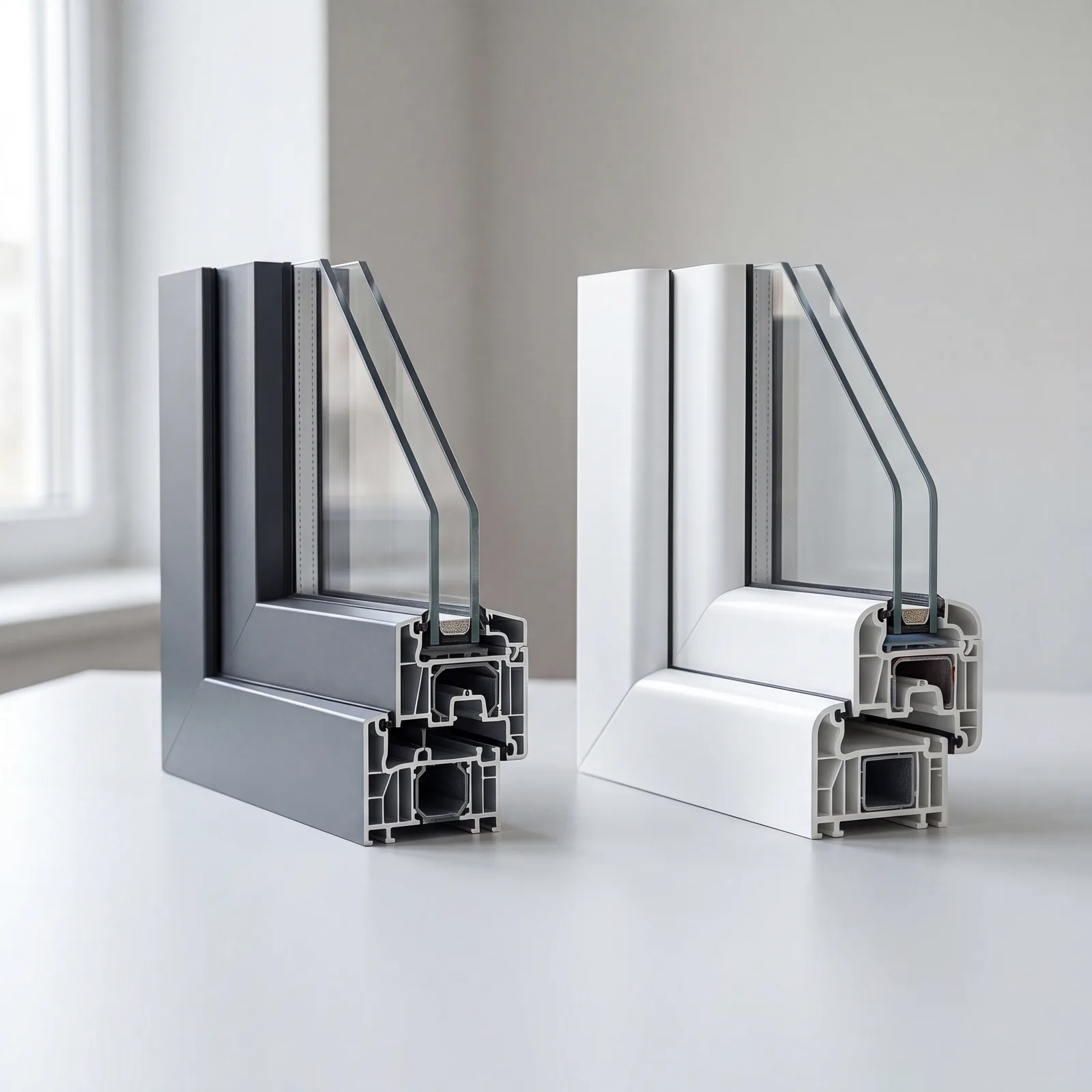
The short answer: choose aluminium if you want slimmer frames, larger panes of glass, strong design flexibility and a longer-term premium finish. Choose uPVC if you want a practical, lower-upfront-cost window system and are comfortable with chunkier frames.
Both materials can work well in Manchester and Cheshire homes. The right choice depends on the age and style of the property, the glass specification, the budget, and how much importance you place on sightlines, colour, maintenance and service life.
Aluminium and uPVC at a glance
| Factor | Aluminium windows | uPVC windows |
|---|---|---|
| Appearance | Slim, crisp frames with a contemporary or heritage look. | Usually thicker frames, with flush and coloured options available. |
| Strength | Very strong, suitable for larger openings and more glass. | Practical for standard openings, but generally bulkier for strength. |
| Efficiency | Thermally broken systems can perform very well with the right glass. | Naturally insulating and efficient when specified and installed properly. |
| Maintenance | Low maintenance; powder-coated finishes should be cleaned gently. | Low maintenance; quality varies, and cheaper frames may discolour over time. |
| Budget | Higher upfront cost, often chosen for design value and longevity. | Usually the lower-cost route for like-for-like replacements. |
| Best suited to | Premium homes, large glazing, extensions, heritage-style upgrades and design-led projects. | Budget-conscious replacements, rental properties and straightforward domestic upgrades. |
Appearance and sightlines
The biggest visible difference is frame size. Aluminium is stronger than uPVC, so the profiles can usually be slimmer while supporting larger panes of glass. That gives a cleaner look, more daylight and less interruption across the view.
For contemporary extensions in areas such as Altrincham, Hale, Didsbury and Wilmslow, aluminium often suits the architecture because it looks sharp and precise. It also works well for heritage-style windows where slim proportions and carefully chosen colours matter.
uPVC has improved significantly. Flush casement styles and coloured foils can look much better than older white plastic frames, but the profile depth is still usually more noticeable. On some homes that is acceptable; on others it can feel too heavy.
Energy efficiency and comfort
Frame material alone does not decide how warm a window will be. The full system matters: frame design, thermal breaks, sealed unit quality, spacer bars, installation accuracy, ventilation and airtightness.
Modern aluminium windows use thermal breaks to reduce heat transfer through the frame. Combined with quality double or triple glazing, they can be a strong option for comfort and efficiency. uPVC is naturally insulating and can also deliver excellent performance when specified properly.
If comfort is the main concern, compare the complete window specification rather than asking only which material is warmer. Our guide to whether triple glazing is worth it explains when the glass upgrade can make a meaningful difference.
Maintenance and lifespan
Both aluminium and uPVC are low-maintenance compared with timber. Aluminium should be cleaned with mild soapy water and a soft cloth to protect the powder-coated finish. uPVC should also be cleaned gently, especially around drainage slots, hinges and seals.
Aluminium usually has the advantage for long service life because it is rigid, stable and resistant to warping. uPVC can last well when the product quality is good, but cheaper frames may yellow, move or look tired sooner.
For existing aluminium frames that are still sound, maintenance or repairs may be more sensible than replacement. See our aluminium window maintenance guide for practical care and warning signs.
Cost and long-term value
uPVC normally costs less upfront. Aluminium generally costs more because of the material, fabrication process, finish and system strength. That higher cost can be justified when the design finish, sightlines and longevity are important to the property.
There is no useful single price without a survey. Window size, opening style, glass type, colour, hardware, access, making good and installation complexity all affect the final quote. A home with large aluminium picture windows is not comparable with a simple like-for-like uPVC replacement.
If you are budgeting, read our 2026 replacement window cost guide before comparing quotes.
Which should you choose?
Aluminium is usually the better fit if:
- You want slim frames and a larger glass area.
- The property is high-value, design-led or architecturally detailed.
- You are upgrading bi-fold doors, sliding doors or large glazed openings at the same time.
- You want a durable powder-coated finish in a specific colour.
- You are thinking about long-term appearance as well as upfront cost.
uPVC is usually the better fit if:
- Budget control is the main priority.
- The project is a straightforward like-for-like replacement.
- The property does not need especially slim sightlines.
- You want a practical, low-maintenance option for a rental or standard domestic property.
Useful next step: explore our aluminium and uPVC window options to compare window styles, glazing choices and related door systems.
Common mistakes to avoid
- Choosing only on headline price without checking glass, hardware, trims, removal and making good.
- Comparing aluminium and uPVC quotes that use different glazing specifications.
- Ignoring frame proportions on period or character homes.
- Assuming triple glazing will fix every comfort issue without checking ventilation and installation quality.
- Leaving colour and finish decisions until late in the project.
Frequently asked questions
Are aluminium windows better than uPVC windows?
Aluminium is usually stronger, slimmer and longer lasting. uPVC is usually more affordable. The better choice depends on your property style, budget and priorities.
Can aluminium windows be energy efficient?
Yes. Thermally broken aluminium frames with good sealed units can perform very well. Installation quality and the glass specification are critical.
Is uPVC still a good choice?
Yes. Good uPVC remains a practical choice for many homes, especially where budget control matters more than slim sightlines or a premium architectural finish.
Which material suits period homes?
Period homes need careful attention to proportions, colour and local requirements. Slim heritage-style aluminium can work well, but conservation or listed-building rules should be checked early.